
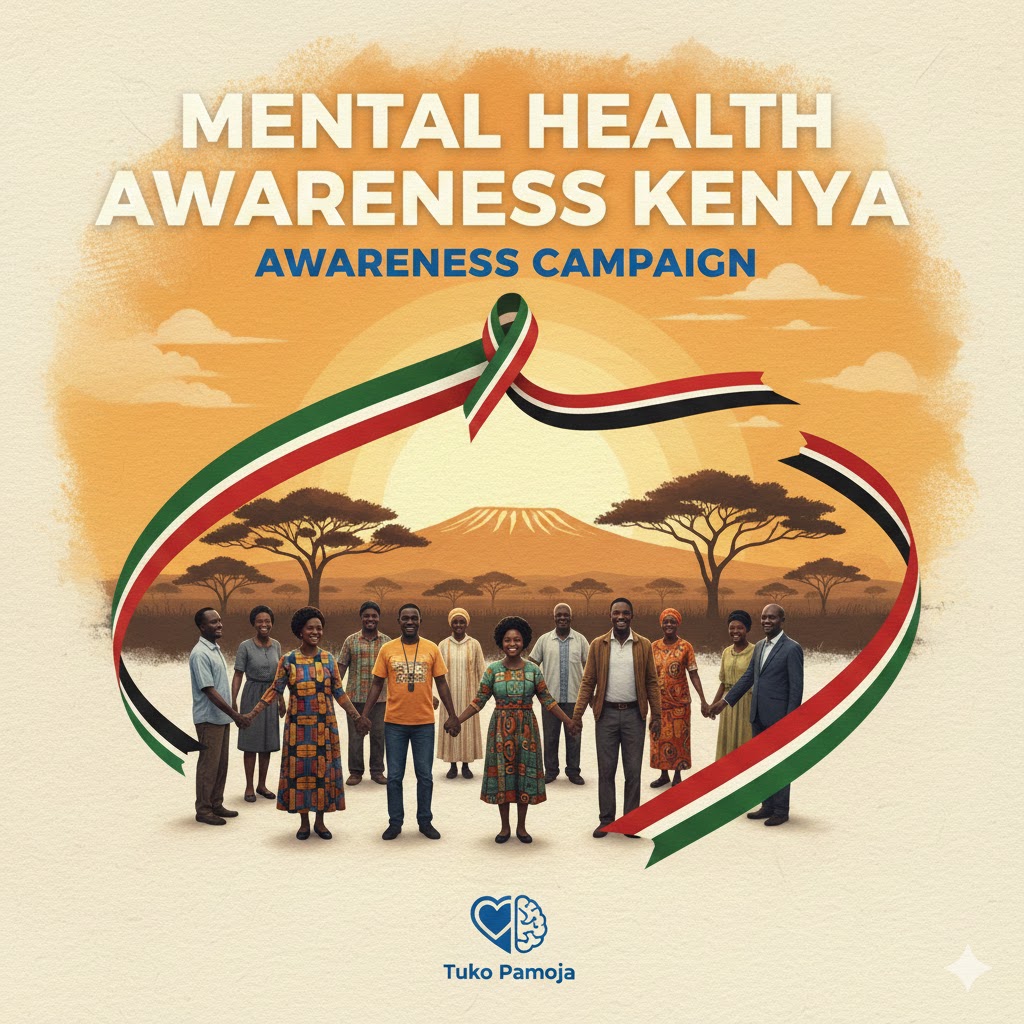
Mental health awareness among the youth in Kenya has become an increasingly important conversation in recent years. With a large percentage of the population made up of young people, issues such as stress, anxiety, depression, substance abuse, and burnout are affecting many silently. Academic pressure, unemployment, economic hardship, social media influence, and family expectations have contributed to rising mental health challenges among Kenyan youth.
For a long time, mental health has been surrounded by stigma and misunderstanding. Many young people fear being judged, labeled as weak, or misunderstood if they speak openly about their struggles. As a result, they suffer in silence, which can lead to severe consequences such as isolation, poor academic performance, addiction, or even suicide. Breaking this silence is a critical step toward healing and prevention.
Today, there is growing awareness through schools, universities, youth-led organizations, social media campaigns, and community programs. These platforms are helping normalize conversations around mental well-being and encouraging young people to seek help. Access to counseling services, peer support groups, and mental health education is slowly improving, especially in urban areas.
However, more needs to be done. Mental health services should be affordable, accessible, and youth-friendly across both urban and rural Kenya. Parents, educators, religious leaders, and policymakers must work together to create safe spaces where young people feel heard and supported.
Empowering the youth with mental health knowledge helps them build resilience, self-awareness, and healthy coping mechanisms. By prioritizing mental health awareness, Kenya can nurture a generation that is not only physically strong but emotionally balanced, confident, and ready to contribute positively to society.
About the Author