
What is a Solar Eclipse?
A solar eclipse is one of the most awe-inspiring celestial events you can witness. It occurs when the Moon passes between the Earth and the Sun, blocking all or part of the Sun’s light for a short period of time. During this moment, day can suddenly turn into night, temperatures can drop, and the sky can take on an eerie glow.
But how does this cosmic event actually happen?
How Does a Solar Eclipse Occur?
To understand a solar eclipse, you need to know a little bit about the orbits of the Moon and Earth.
- The Moon orbits Earth about once every 27.3 days.
- The Earth orbits the Sun once every 365.25 days.
- A solar eclipse happens when the Moon lines up perfectly between the Earth and the Sun during its orbit — a rare alignment called syzygy.

However, solar eclipses don’t happen every month, even though the Moon orbits Earth regularly. That’s because the Moon’s orbit is tilted about 5 degrees relative to Earth’s orbit around the Sun. Most of the time, the Moon passes slightly above or below the Sun in our sky. Only when the alignment is just right — at points called nodes — do we get an eclipse.
Types of Solar Eclipses
There are three main types of solar eclipses:
- Total Solar Eclipse 🌕🌞
- The Moon completely covers the Sun, and the sky goes dark for a few minutes.
- You can see the Sun’s corona (its outer atmosphere) glowing around the dark Moon.
- Partial Solar Eclipse 🌗🌞
- Only part of the Sun is covered by the Moon. It looks like a bite was taken out of the Sun.
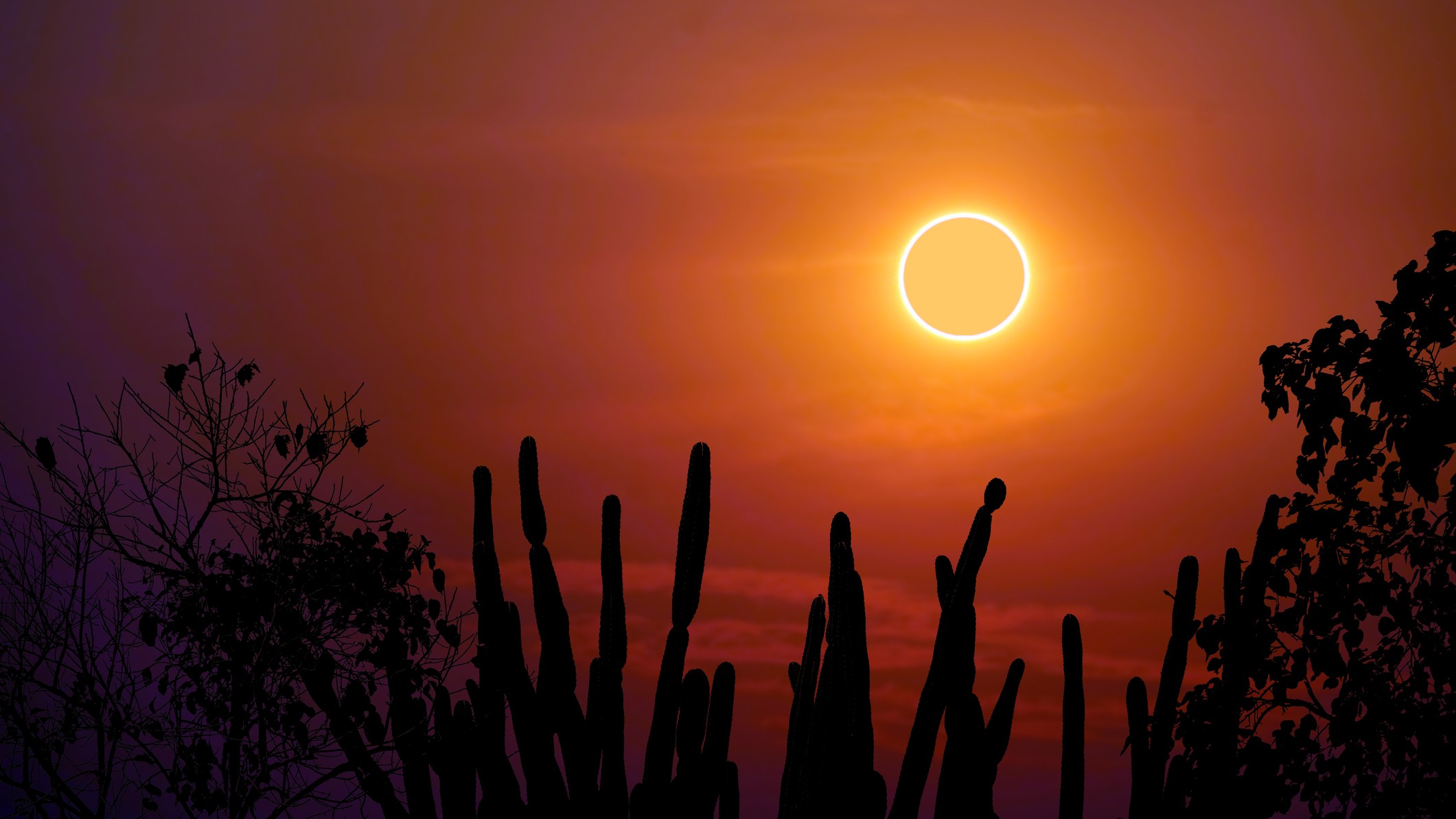
- Annular Solar Eclipse 🔘🌞
- The Moon is slightly farther from Earth and appears smaller, so it doesn’t fully cover the Sun.
- This creates a stunning “ring of fire” effect around the Moon.
Safety Tip!
Never look directly at a solar eclipse without proper eye protection. Use certified solar eclipse glasses or view it indirectly using a pinhole projector. Looking directly at the Sun can cause permanent eye damage.
Why Are Solar Eclipses So Special?
- They remind us of the precise and predictable motions of celestial bodies.
- They’ve influenced myths, science, and human understanding of space for centuries.
- Every eclipse is unique — depending on where you are on Earth, you may see a totally different version of the same event.
When is the Next Solar Eclipse?
Keep an eye on local astronomy websites or NASA’s eclipse calendar to find out when the next solar eclipse will be visible in your region. You don’t want to miss it!
About the Author