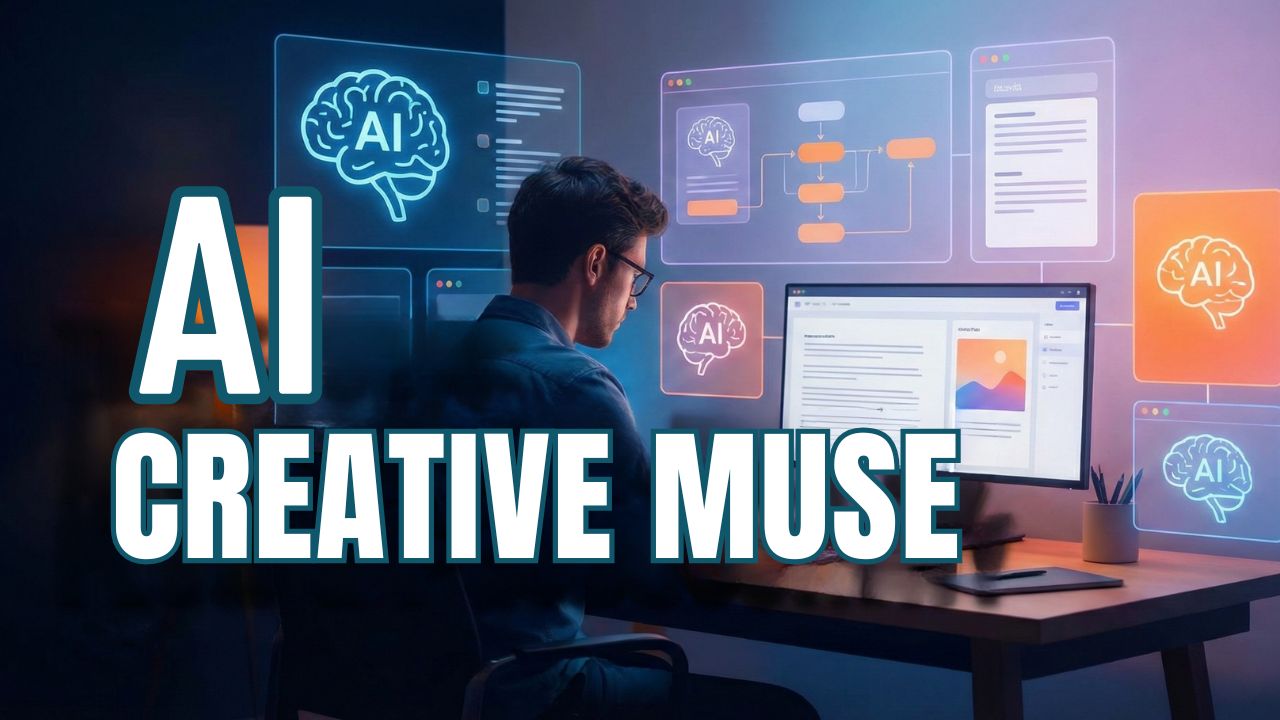
For decades, the “creative flow” was a sacred, linear progression. It began with the quiet toil of preparation, moved into the mysterious subconscious incubation, and eventually sparked into illumination. But as artificial intelligence integrates into our studios and newsrooms, this steady stream is experiencing a profound—and often jarring—interruption.
The Death of the “Slow Build”
The most immediate interruption is the collapse of the waiting period. Traditionally, the gap between an idea and its first draft allowed for critical reflection. AI eliminates this “dead time.” When you can generate fifty logos or a three-hundred-page outline in seconds, the psychological space required for an idea to breathe is compressed. We are shifting from creators to curators, often before we’ve even fully understood what we wanted to create.
The Paradox of Choice
Flow states require a balance between challenge and skill. AI often disrupts this by making the “challenge” trivial. When the friction of manual labor mixing the paint, coding the function, or finding the right metaphor is removed, the mind can struggle to anchor itself. Instead of a deep dive into a single problem, we find ourselves in a “horizontal” flow, skimming across endless AI-generated variations. This over-choice can lead to decision fatigue, halting the creative momentum it was supposed to accelerate.
Reclaiming the Human Pulse
To navigate this, we must treat AI not as a replacement for the process, but as a new kind of creative friction. The goal isn’t just efficiency; it’s intentionality.
- Protect the Incubation: Take intentional breaks away from the screen to let your own mind process ideas without algorithmic input.
- Set Constraints: Limit yourself to a specific number of AI iterations to avoid the “infinite scroll” of possibilities.
- The 80/20 Rule: Use AI for the 80% of mundane production, but fiercely protect the 20% that requires your unique, messy, and non-linear human perspective.
The interruption is real, but it’s also an invitation. By acknowledging how AI breaks our flow, we can build a more resilient, hybrid way of creating—one where the machine provides the speed, but the human provides the soul.
About the Author